Global Bitcoin Mining Report September 2026: Hashrate Rankings, Regulations & Hardware-Free Mining
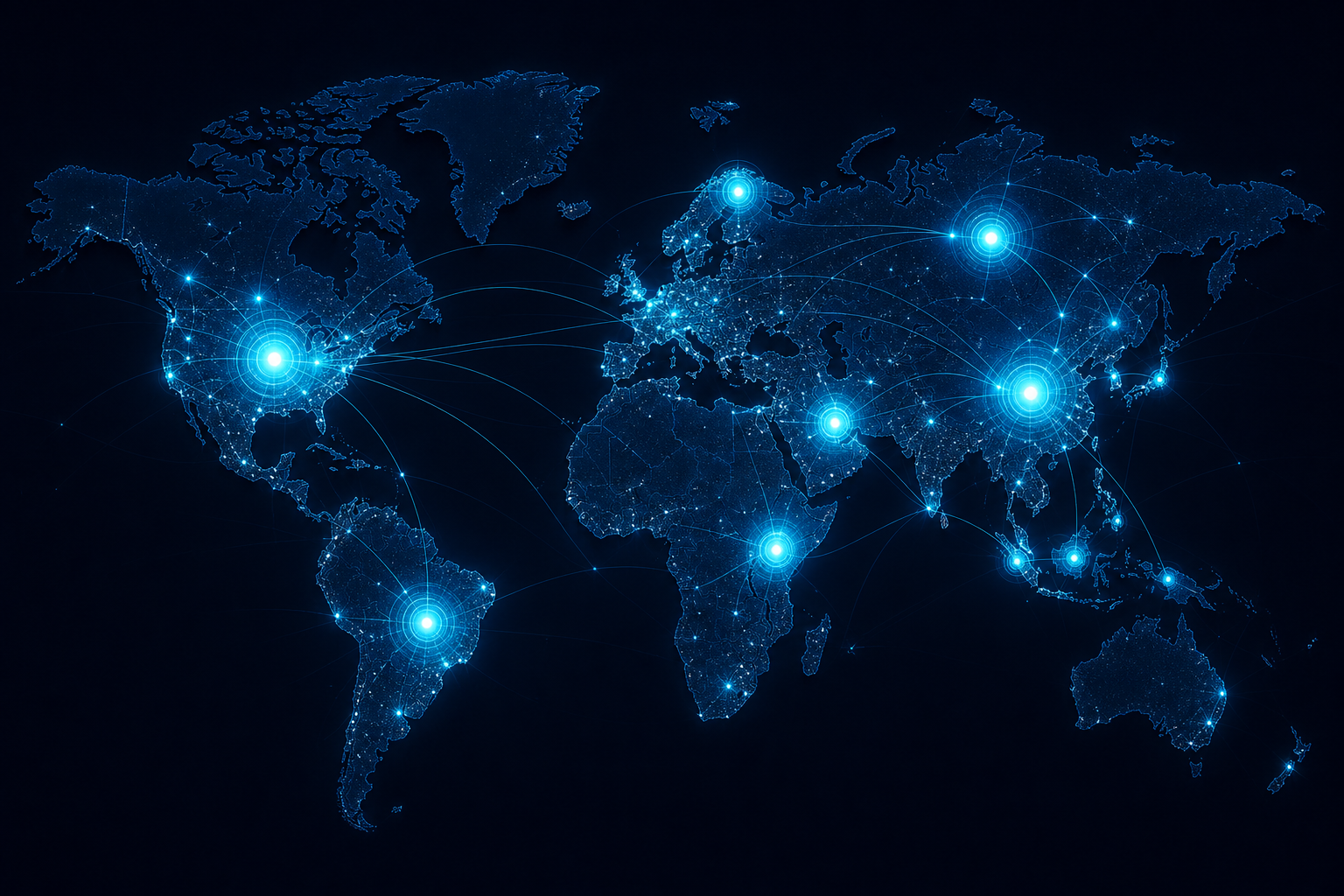
September 2026 marked an important period for the global Bitcoin mining industry, with significant changes in regional mining activity, increasing network competition, new energy policies, and growing interest in accessing mining capacity without owning physical equipment.
According to Hashrate Index's October 5 geographic report, the Bitcoin network ended the third quarter of 2026 with approximately 941 exahashes per second (EH/s) of computing power, measured using a 30-day average.
The United States maintained its position as the world's leading Bitcoin mining country, followed by Russia and China. Meanwhile, emerging markets such as Pakistan, Venezuela, Indonesia and Oman demonstrated growth in mining capacity.
The United Arab Emirates remained among the world's leading Bitcoin mining jurisdictions, holding sixth position with an estimated 26 EH/s.
At the same time, the global mining industry continued shifting toward professional hosting infrastructure, efficient power utilisation, advanced ASIC technology, and more accessible hashrate services.
In this monthly industry report, Minersme Cloud examines the global mining landscape, country-by-country mining rankings, regulatory developments, emerging opportunities, and the introduction of PoolBTC.io's new Direct Hashrate Purchase strategy.
September 2026 at a Glance
| Key indicator | Value | What it measures |
|---|---|---|
| 941 EH/s | Global network hashrate | Q3 closing 30-day average |
| 35.6% | United States share | Largest single mining jurisdiction |
| #6 — 26 EH/s | United Arab Emirates rank | Among the top Middle Eastern markets |
| 132.76 trillion | Mining difficulty at month-end | Network competition level |
Two different reporting periods appear throughout this article, and the distinction matters. The network statistics below describe activity during September 1–30, 2026. The country rankings come from a separate geographic dataset published on October 5, 2026, which reports estimated positions as at the close of the third quarter.
1. Global Bitcoin Hashrate Reaches Approximately 941 EH/s
Bitcoin network hashrate represents the total estimated computing power dedicated to securing the Bitcoin blockchain through proof-of-work mining.
Higher network hashrate generally indicates greater aggregate computational activity securing the blockchain. However, it also increases competition among miners, particularly when mining difficulty adjusts upward.
During September 2026, the Bitcoin network experienced renewed hashrate growth toward the end of the month.
Luxor's September mining market review reported:
| Network indicator | September 2026 |
|---|---|
| Global network hashrate, Q3 closing 30-day average | Approximately 941 EH/s |
| Seven-day hashrate average at start of September | 926 EH/s |
| Seven-day hashrate average at end of September | 975 EH/s |
| Bitcoin mining difficulty at month-end | 132.76 trillion |
| Cumulative September difficulty increase | Approximately 5.52% |
| September closing Bitcoin price | Approximately USD 83,687 |
| September closing USD hashprice | USD 39.92 per PH/s/day |
Source: Luxor Hashrate Lookback Series — September 2026, published October 9, 2026.
The increase in seven-day average network hashrate reflects a recovery in active mining computing power during September.
For mining companies, these changes reinforce the importance of efficient ASIC hardware, competitive electricity costs, high uptime, and professional infrastructure management.
2. Top 10 Bitcoin Mining Countries — September 2026 Rankings
Global Bitcoin mining remains geographically concentrated, although new markets are becoming increasingly relevant.
Based on the Hashrate Index geographic report published on October 5, 2026, the following countries accounted for the largest estimated shares of global Bitcoin network hashrate at the end of the third quarter.
| Rank | Country | Estimated hashrate | Global share |
|---|---|---|---|
| 1 | 🇺🇸 United States | 335 EH/s | 35.6% |
| 2 | 🇷🇺 Russia | 170 EH/s | 18.1% |
| 3 | 🇨🇳 China | 110 EH/s | 11.7% |
| 4 | 🇵🇾 Paraguay | 45 EH/s | 4.8% |
| 5 | 🇴🇲 Oman | 28 EH/s | 3.0% |
| 6 | 🇦🇪 United Arab Emirates | 26 EH/s | 2.8% |
| 7 | 🇨🇦 Canada | 22 EH/s | 2.3% |
| 8 | 🇮🇩 Indonesia | 20 EH/s | 2.1% |
| 9 | 🇳🇴 Norway | 16 EH/s | 1.7% |
| 10 | 🇪🇹 Ethiopia | 15 EH/s | 1.6% |
Estimated Hashrate by Country
| Country | Relative scale | EH/s |
|---|---|---|
| 🇺🇸 United States | ██████████████████████████████ | 335 |
| 🇷🇺 Russia | ███████████████ | 170 |
| 🇨🇳 China | ██████████ | 110 |
| 🇵🇾 Paraguay | ████ | 45 |
| 🇴🇲 Oman | ██▌ | 28 |
| 🇦🇪 United Arab Emirates | ██▍ | 26 |
| 🇨🇦 Canada | ██ | 22 |
| 🇮🇩 Indonesia | █▊ | 20 |
| 🇳🇴 Norway | █▍ | 16 |
| 🇪🇹 Ethiopia | █▎ | 15 |
Important: Country-level Bitcoin hashrate figures are industry estimates, not an official blockchain census. Bitcoin's network does not directly disclose miners' geographic locations. Values are rounded and may not sum to exactly 100%.
United States — Global Mining Leader
The United States continued to dominate the global Bitcoin mining industry with approximately 335 EH/s, representing 35.6% of total estimated network computing power.
Although it remained the largest mining market, estimated U.S. hashrate declined from approximately 345 EH/s in the preceding quarterly dataset.
The country's mining industry continues to be influenced by electricity economics, large-scale industrial infrastructure, grid flexibility, and competition for power resources from AI and high-performance computing facilities.
Russia — Second-Largest Bitcoin Mining Country
Russia accounted for approximately 170 EH/s, or 18.1% of the global network.
Its estimated mining hashrate increased during the quarter, reflecting continued expansion in parts of the country despite regulatory restrictions affecting certain regions.
Mining operations in Russia remain strongly dependent on electricity access, local regulations and regional operating conditions.
China — A Significant Mining Presence
China retained third position with an estimated 110 EH/s, equivalent to approximately 11.7% of global Bitcoin mining hashrate.
Despite longstanding restrictions on cryptocurrency mining, geographic estimates continue to indicate substantial mining activity associated with China.
Paraguay — A Leading Latin American Mining Market
Paraguay ranked fourth with approximately 45 EH/s.
The country continues to attract industry attention because of its hydroelectric resources and opportunities for power-intensive industrial operations.
Oman and the United Arab Emirates — Major Middle Eastern Mining Markets
Oman and the UAE occupied fifth and sixth positions respectively.
Oman's estimated hashrate increased to approximately 28 EH/s, while the UAE recorded approximately 26 EH/s.
These rankings highlight the Middle East's continued importance in industrial cryptocurrency mining.
3. Which Countries Are Growing Their Bitcoin Mining Capacity?
Although global hashrate was relatively stable across the third quarter, individual countries experienced meaningful increases and decreases in mining activity.
Some emerging markets expanded their presence even as established jurisdictions faced changing electricity economics and infrastructure competition.
| Country | Previous estimate | September-end estimate | Approximate growth |
|---|---|---|---|
| 🇷🇺 Russia | 162 EH/s | 170 EH/s | +5% |
| 🇵🇰 Pakistan | 2.5 EH/s | 8 EH/s | +220% |
| 🇻🇪 Venezuela | 6 EH/s | 10 EH/s | +67% |
| 🇮🇩 Indonesia | 17 EH/s | 20 EH/s | +18% |
| 🇴🇲 Oman | 26 EH/s | 28 EH/s | +8% |
Quarterly Growth Rate
| Country | Relative growth | Change |
|---|---|---|
| 🇵🇰 Pakistan | ██████████████████████████████ | +220% |
| 🇻🇪 Venezuela | █████████ | +67% |
| 🇮🇩 Indonesia | ██▌ | +18% |
| 🇴🇲 Oman | █ | +8% |
| 🇷🇺 Russia | ▌ | +5% |
Pakistan's increase was particularly notable, with estimated computing power growing from approximately 2.5 EH/s to 8 EH/s.
Venezuela also emerged as a growing market, reaching approximately 10 EH/s.
Indonesia strengthened its position among the top ten mining countries, reaching around 20 EH/s.
These changes suggest continued diversification in the global mining industry.
However, increasing estimated hashrate should not automatically be interpreted as an indication of favourable licensing conditions, unrestricted electricity access, or guaranteed profitability.
Successful mining operations still require a stable regulatory environment, reliable power infrastructure, and appropriate technical management.
4. New Cryptocurrency Mining Laws and Energy Policies — September 2026
Government regulations and national energy policies continued to influence the global mining landscape during September.
Several countries introduced, announced or advanced developments affecting mining operations.
🇴🇲 Oman — Stronger Enforcement of Mining Equipment Licensing
On September 13, 2026, Oman's Ministry of Commerce, Industry and Investment Promotion warned suppliers against selling or providing cryptocurrency mining equipment to individuals or entities lacking the required licences and approvals.
Equipment suppliers were instructed to verify that purchasers possessed the relevant regulatory permissions before completing transactions.
The development reinforces the importance of compliance in Oman's growing mining sector.
For mining companies and investors, licensing and regulatory verification are becoming increasingly important factors when evaluating potential mining destinations.
🇰🇿 Kazakhstan — New Opportunities for Mining Using Oilfield Gas
During September 2026, Kazakhstan advanced a framework allowing cryptocurrency mining operators to generate electricity using associated petroleum gas from oilfields.
Associated gas is produced during oil extraction and may otherwise be flared where processing or transportation infrastructure is unavailable.
Under the developing approach, mining companies may establish dedicated electricity generation facilities using available gas resources, subject to the applicable framework and approvals.
This model could offer several potential advantages:
- Access to dedicated electricity generation.
- Reduced dependence on public grid capacity.
- Productive utilisation of gas that might otherwise be flared.
- Opportunities for industrial mining deployment near energy-producing facilities.
On September 30, Kazakh authorities were also reported to be identifying oil and gas fields suitable for this arrangement.
This represents an important example of integrating digital mining infrastructure with conventional energy production.
🇪🇹 Ethiopia — Electricity Availability Challenges
Ethiopia experienced a significant reduction in estimated Bitcoin mining hashrate during the third quarter.
The country's estimated computing power declined from approximately 23 EH/s to 15 EH/s.
On September 15, reports indicated that electricity allocations for mining operators had been reduced to approximately 23% of contracted levels following hydrological challenges affecting electricity generation.
The situation demonstrates an important principle for mining infrastructure: low electricity prices alone do not ensure a successful mining operation.
Reliability of supply, contractual protections, energy availability and infrastructure resilience must also be considered.
🇷🇺 Russia — Regulatory Restrictions Remain Important
Russia remained a major global mining jurisdiction, but mining regulations and region-specific electricity restrictions continued to affect operating conditions.
Companies considering mining investments in Russia must evaluate the regulatory status of the proposed location, electricity contracts, mining registration requirements and regional restrictions.
What These Regulatory Changes Mean
The events of September demonstrate that mining opportunities are increasingly linked to energy policy and legal compliance.
Countries that can provide regulated access to competitive and reliable electricity are likely to remain attractive to professional mining operators.
5. United Arab Emirates: A Global Bitcoin Mining Infrastructure Hub
The United Arab Emirates remained among the leading countries for Bitcoin mining, with an estimated 26 EH/s of hashrate at the end of September 2026.
The UAE's position reflects its established industrial infrastructure, technology sector, energy resources, and growing ecosystem of blockchain and digital infrastructure companies.

For large-scale mining operations, several considerations influence long-term competitiveness:
Reliable electrical infrastructure: Industrial mining facilities require stable electricity supply, adequate capacity and appropriately engineered distribution systems.
Advanced cooling solutions: ASIC miners produce significant heat and require professionally designed cooling infrastructure, particularly in hot environments.
Efficient equipment deployment: High-efficiency ASIC miners can improve energy productivity and operating economics.
Professional monitoring and management: Continuous equipment monitoring, preventative maintenance, fault detection and operational transparency are necessary for reliable mining services.
Regulatory and contractual compliance: Mining facilities must comply with applicable business licensing, utility, site and other legal requirements.
Minersme Cloud: Supporting Industrial Mining Infrastructure
Minersme Cloud, part of the Minersme technology ecosystem, focuses on cryptocurrency mining infrastructure and associated computing services.
Its areas of activity include:
- ASIC miner hosting and management.
- Industrial mining farm planning and deployment.
- Air-cooled and hydro-cooled mining infrastructure.
- Data centre infrastructure development.
- Mining equipment monitoring and technical support.
- ASIC maintenance and repair-related services.
- Mining pool connectivity and associated software infrastructure.
Through these services, Minersme aims to support customers seeking professional infrastructure solutions for cryptocurrency mining.
As mining competition increases, the company's infrastructure-focused approach emphasises operational efficiency, reliability, technical management and long-term scalability.
You can review the available service tiers on the Minersme plans page or read how the hosting process works.
6. PoolBTC.io: A New Strategy for Mining Without Buying ASIC Hardware
As the global mining industry becomes more competitive, not every participant wants to purchase, install and maintain physical mining equipment.
Traditional cryptocurrency mining requires customers to acquire hardware, secure electricity, manage cooling, connect equipment to mining pools, and monitor the mining operation.
To address these challenges, PoolBTC.io is developing a Direct Hashrate Purchase strategy, designed to let eligible customers access mining computing power and participate in supported mining pools without purchasing their own ASIC hardware.
What Is Direct Hashrate Purchase?
Direct Hashrate Purchase is a model in which a customer purchases a defined amount of mining computing power rather than purchasing the physical equipment that produces it.
For example, a customer interested in Bitcoin mining may wish to access a particular amount of SHA-256 hashrate measured in terahashes per second (TH/s).
Instead of buying and installing an ASIC miner, the customer can select an available hashrate service package through the platform.
The underlying mining infrastructure is then responsible for providing the contracted computing power, subject to the product terms, infrastructure availability and operating conditions.
The customer can participate in mining activity through a supported mining pool without directly owning the hardware.
How PoolBTC.io Direct Hashrate Mining Is Intended to Work
| Step | Stage | What happens |
|---|---|---|
| 1 | Select hashrate | Choose the amount of mining computing power from available packages and supported algorithms. |
| 2 | Purchase a contract | Select a contract duration and review the applicable purchase price, service terms, fees and operating conditions. |
| 3 | Allocate mining power | The purchased computing power is directed to supported mining pool infrastructure through PoolBTC.io. |
| 4 | Monitor mining | Track allocated hashrate, mining performance, pool activity, rewards and contract information through the platform. |
| 5 | Receive variable rewards | Mining rewards are calculated and distributed according to the product, pool payout model and service conditions. |
The purchase provides contracted access to mining computing power rather than ownership of physical ASIC equipment. Mining activity is recorded according to the selected pool's technical architecture and reward allocation rules.
Actual rewards may vary depending on blockchain network difficulty, block discovery, transaction fees, equipment performance, pool methodology and other factors.
Benefits of Mining Without Hardware Ownership
The Direct Hashrate Purchase model is intended to offer several practical benefits.
No need to purchase physical ASIC miners. Customers can access mining computing power without making a direct hardware purchase.
No personal mining facility required. Customers do not need to establish electrical distribution, cooling or physical mining infrastructure at home or in their own premises.
Simplified technical operations. Infrastructure operation, miner deployment and maintenance are handled by the underlying service infrastructure.
Flexible mining participation. Customers can choose among the available contract sizes and supported products according to their requirements.
Mining pool integration. Computing power can be allocated to supported mining pools, providing a more integrated mining experience.
Transparent account monitoring. The planned platform experience emphasises visibility into mining activity, allocated hashrate and reward calculations.
Connecting Physical Mining Infrastructure With Digital Hashrate Access
The PoolBTC.io strategy complements the wider Minersme mining ecosystem.
While Minersme focuses on physical mining infrastructure, hosting, technical operations and associated services, PoolBTC.io aims to provide digital access to mining pool services and hashrate products.
Together, these activities are intended to connect professional mining operations with customers who prefer access to mining computing power rather than direct equipment ownership.
Direct Hashrate Purchase vs Traditional ASIC Mining
| Feature | Traditional ASIC mining | PoolBTC.io Direct Hashrate model |
|---|---|---|
| Physical ASIC purchase | Required for ownership | Not required |
| Customer-owned mining hardware | Yes | No |
| Customer-operated electrical infrastructure | Required for self-hosting | Not required |
| Customer-operated cooling infrastructure | Required for self-hosting | Not required |
| Mining computing power | Produced by owned hardware | Provided through a contracted service |
| Mining pool connection | Configured by miner or operator | Intended to be integrated |
| Hardware maintenance | Owner or hosting provider | Underlying infrastructure provider |
| Mining rewards | Variable | Variable |
| Hardware ownership after contract | Retained by owner | No hardware ownership |
The final commercial features of PoolBTC.io's Direct Hashrate Purchase products will depend on the packages and service conditions offered at launch.
Important Mining Risk Considerations
Direct Hashrate Purchase is not the same as buying Bitcoin or purchasing physical mining equipment.
Mining income is inherently variable. Purchasing hashrate does not guarantee a particular quantity of cryptocurrency, profitability, capital recovery or a fixed return.
Customers should understand product fees, contract duration, mining payout calculations, service availability and the relevant regulatory requirements before purchasing hashrate services.
To follow this strategy as it develops, visit PoolBTC.io.
7. The Future of Bitcoin Mining: Infrastructure, Efficiency and Accessible Hashrate
The September 2026 mining data highlights three important industry developments.
First: Global Mining Capacity Is Becoming More Geographically Diverse
Although the United States, Russia and China still account for most of the world's estimated hashrate, emerging countries are gaining a larger presence in the global mining industry.
New infrastructure opportunities are increasingly connected to local electricity economics and available energy resources.
Second: Mining Efficiency and Electricity Reliability Are Essential
Growing network competition means that inefficient miners and facilities with unstable electricity supplies face greater operational challenges.
ASIC efficiency, cooling design, equipment uptime and electricity supply are central to competitive mining operations.
Third: Access to Mining May Extend Beyond Hardware Ownership
Traditional ASIC ownership and hosting remain important parts of the mining industry.
However, direct hashrate services offer an alternative model for customers who prefer not to own or manage physical mining machines.
PoolBTC.io's planned Direct Hashrate Purchase strategy reflects this broader interest in making mining capacity more accessible through digital services.
8. Outlook for the Global Mining Industry
The coming months are likely to bring continued competition for efficient electricity, growing interest in industrial mining infrastructure, and further development of hashrate products.
Mining companies will need to pay close attention to network difficulty, Bitcoin market conditions, regulatory requirements and power infrastructure availability.
In the UAE and other established mining markets, long-term competitiveness will depend heavily on professional deployment, reliable technical operations and effective energy management.
At the same time, alternative access models may create new options for customers who want exposure to mining activity without direct ownership of mining hardware.
Minersme Cloud and PoolBTC.io: Building an Integrated Mining Ecosystem
Minersme's infrastructure and technology activities are focused on providing services across different areas of the mining industry.
From industrial ASIC hosting and mining facility development to mining pool infrastructure and direct hashrate services, the ecosystem aims to serve customers with different operational requirements.
Whether customers are deploying their own ASIC equipment or exploring access to contracted mining computing power, reliable infrastructure and transparent service delivery remain essential.
Conclusion
September 2026 demonstrated how rapidly the global Bitcoin mining landscape continues to evolve.
With approximately 941 EH/s of global computing power at the end of the third quarter, the industry remained highly competitive while mining capacity continued to shift among countries.
The United States retained its leading position, Russia strengthened its share, and emerging countries including Pakistan and Venezuela recorded notable estimated hashrate growth.
Meanwhile, regulatory and energy developments in Oman, Kazakhstan and Ethiopia demonstrated the growing importance of compliance and electricity availability.
For Minersme Cloud, these trends reinforce the importance of efficient industrial infrastructure and professional mining operations.
For PoolBTC.io, the developing Direct Hashrate Purchase strategy represents a potential additional pathway for customers to participate in cryptocurrency mining without purchasing their own ASIC machines.
The future of mining will depend not only on how much computing power is available, but also on how efficiently, reliably and transparently that computing power can be delivered.
About Minersme Cloud
Minersme Cloud is part of the Minersme technology ecosystem, focused on cryptocurrency mining infrastructure, ASIC hosting, data centre development, mining equipment management and associated cloud computing services.
Through its infrastructure and software activities, Minersme aims to provide reliable solutions for mining customers and businesses.
- Website: minersme.com
- Cloud services: minersme.cloud
- Mining pool: poolbtc.io
If you would like to discuss hosting or infrastructure requirements, you can contact the Minersme team or read more about the company.
Research Sources and References
- Hashrate Index — Global Hashrate Heatmap Update: Q4 2026 (published October 5, 2026). https://hashrateindex.com/blog/global-hashrate-heatmap-update-q4-2026-c/
- Luxor / Hashrate Index — Luxor Hashrate Lookback Series: September 2026 (published October 9, 2026). https://hashrateindex.com/blog/luxor-hashrate-lookback-series-september-2026/
- Oman Observer — Oman Warns Against Sale of Crypto-Mining Equipment (September 13, 2026). https://www.omanobserver.om/article/1196082/oman/oman-warns-against-sale-of-crypto-mining-equipment
- Interfax Kazakhstan — Kazakhstan to Allow Crypto Miners to Install Autonomous Power Plants at Oil and Gas Fields (September 15, 2026). https://interfax.kz/en/news/82491
- Euronews — Kazakhstan Wants Crypto Miners to Use Power Generated by Excess Oil Field Gas (September 25, 2026). https://www.euronews.com/2026/09/25/kazakhstan-wants-crypto-miners-to-use-power-generated-by-excess-oil-field-gas
Data Methodology and Disclaimer
Bitcoin does not publish the physical location of every mining machine. The country-level figures in this article are industry estimates based primarily on Hashrate Index's Q4 2026 Global Hashrate Heatmap, published October 5, 2026. Hashrate Index states that its geographic model uses a weighted combination of mining-pool data, ASIC trading flows and firmware-adoption trends.
Network-level statistics covering September 1–30, 2026 are drawn from the Luxor Hashrate Lookback Series published October 9, 2026. Country rankings and network statistics come from these two separate datasets and cover different reporting periods; they should not be read as a single measurement.
These values should not be interpreted as official, audited or directly measured country totals. Values are rounded and may not sum to exactly 100%.
This report is provided for industry information and research purposes only. Regulatory information is not legal advice and does not constitute financial, investment or tax advice. Cryptocurrency mining involves technical, market, operational and financial risks. Mining rewards and profitability are not guaranteed.


Mine Bitcoin with a real UAE operator
MinersME is a UAE-based Bitcoin mining company running professional ASIC miner hosting and cloud mining since 2014. We host thousands of miners with 99%+ uptime, 24/7 monitoring, and an in-house ASIC repair center, so you can earn daily BTC without running hardware yourself.
Bring your own ASIC for colocation, buy a miner we host for you, or start with a hands-off cloud or micro contract — every plan comes with transparent daily payouts and clear PPS, PPS+ and FPPS reporting. Explore our mining plans, see how it works, or read more guides on the MinersME blog.