When Should Miners Use Colocation Services?
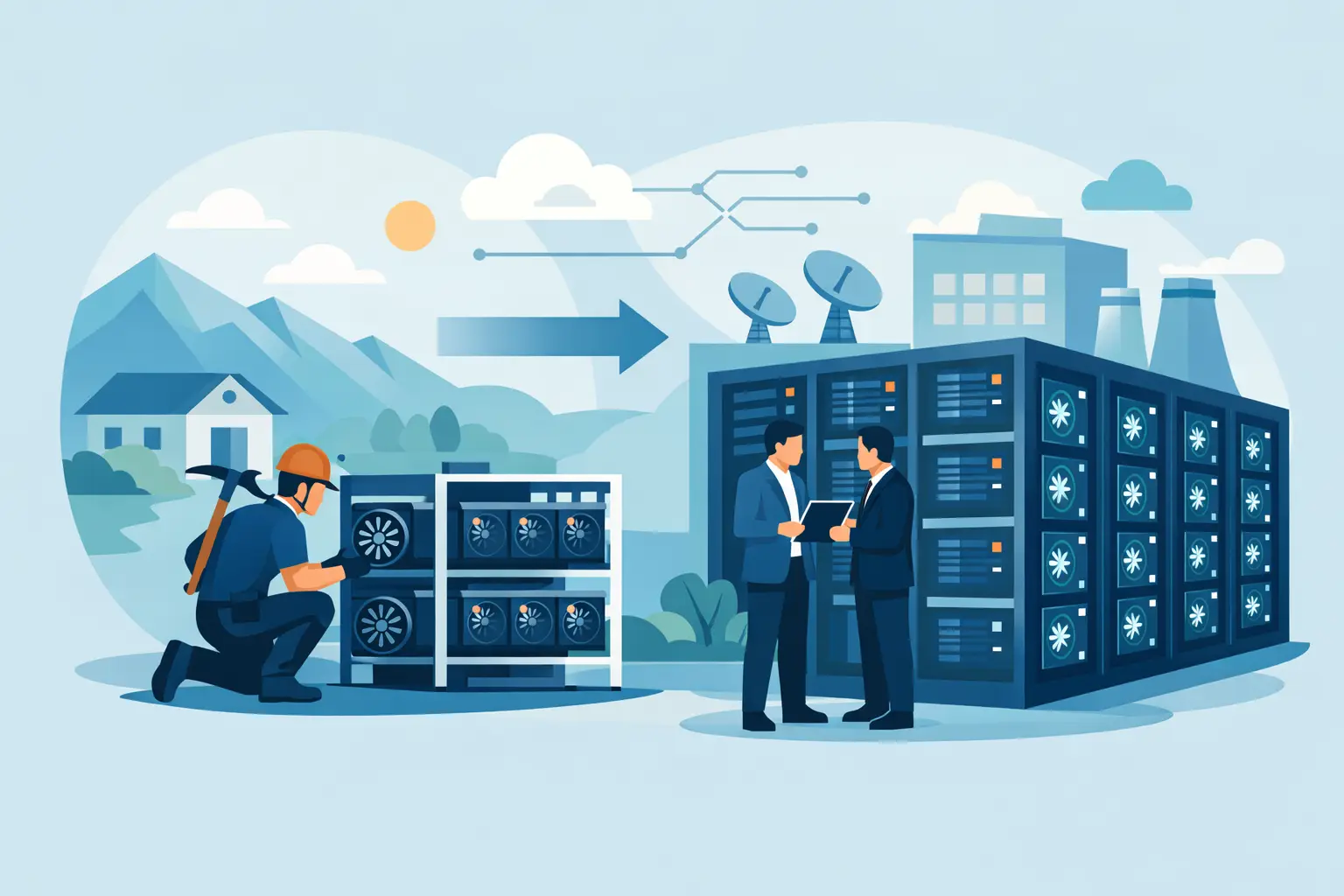
An ASIC miner is not a passive asset once it arrives. It draws significant power, produces intense heat, needs a stable network connection, and can lose productive hours when a fan, hashboard, or power supply fails. That is the practical answer behind when should miners use colocation: when operating the machine at home or in a self-managed site starts creating more risk and work than the miner should carry.
Colocation means placing hardware you own in a professionally operated mining facility. The operator provides the power infrastructure, cooling, connectivity, monitoring, physical security, and day-to-day technical response. You retain ownership of the ASIC and, depending on the agreement, direct control of the mining pool and Bitcoin payout address.
For some miners, colocation is the logical first step into physical ASIC ownership. For others, it becomes necessary as a fleet grows. The right decision comes down to economics, operational capacity, and how much control you need over the equipment and its output.
When should miners use colocation?
Miners should consider colocation when they have ASIC hardware but do not have access to reliable, mining-suitable infrastructure. A spare room, garage, warehouse, or office may have enough space for one machine, but space is not the same as a data center environment.
Modern ASICs operate continuously at high load. The electrical circuit must handle sustained demand safely, cooling must remove heat day and night, and the internet connection must remain stable enough to prevent unnecessary downtime. In warm climates, especially across the UAE and GCC, heat management is not a seasonal concern. It is a core operating cost and a direct factor in machine health.
Colocation is usually the better fit when at least one of these conditions applies:
- Your available electricity is expensive, unreliable, or subject to residential restrictions.
- Your location cannot safely manage the heat, noise, and electrical load of an ASIC.
- You own several miners and lack staff or systems to monitor them around the clock.
- You want access to professional repair, firmware configuration, pool management, and performance reporting.
- You want to keep hardware ownership while avoiding the capital expense of building a facility.
A single condition can be enough. For example, one high-efficiency ASIC may be technically possible to run at home, but its noise level and heat output can make the setup impractical. A mining facility removes that daily friction while giving the machine an environment designed for continuous operation.
The cost question is bigger than the power rate
Electricity is the first number most miners compare, and it should be. But a low advertised rate does not automatically mean lower total operating cost. A useful comparison includes the all-in cost of keeping the ASIC hashing productively.
At home, the visible power bill is only part of the equation. You may also need upgraded wiring, breakers, ventilation, extraction fans, ducting, backup connectivity, surge protection, insurance considerations, and spare parts. If an issue occurs while you are traveling or asleep, the machine may stay offline until someone notices.
A colocation fee should be evaluated with the same discipline. Ask what it covers: electricity, rack space, cooling, monitoring, security, remote hands, pool configuration, routine cleaning, and repair coordination are not always included in the same way. Clarify whether the rate is fixed, indexed, or subject to market changes, and understand how power consumption is measured.
The most relevant number is not simply cents per kilowatt-hour. It is the expected net Bitcoin production after power, hosting, downtime, pool fees, and maintenance. A slightly higher facility rate may still be the stronger commercial choice if it delivers better uptime, faster intervention, and less performance loss from heat or poor configuration.
This matters even more in weak Bitcoin markets. Mining margins can compress quickly when the BTC price falls, network difficulty rises, or both happen together. A downside-conscious energy model can reduce uncertainty. For example, MinersME caps electricity at $0.05/kWh when Bitcoin trades below $80,000, giving hosted miners a defined level of energy-cost protection during a market downturn.
Colocation makes sense when uptime has real value
A miner that is powered on but not hashing is not earning. Downtime can come from simple issues: an internet interruption, a tripped breaker, a failed fan, an overheated unit, a pool configuration error, or a machine that needs a restart. On a larger fleet, small failures compound.
Professional colocation is designed to reduce the time between a problem appearing and someone acting on it. That does not mean every machine will run perfectly forever. ASIC hardware is physical equipment, and failures are part of mining. What changes is the response model. A staffed site with 24/7 monitoring, tested power distribution, industrial cooling, and access to technicians can identify and resolve issues faster than an owner managing machines remotely from another country.
Before choosing a provider, ask how uptime is measured. Is it facility uptime, power uptime, network uptime, or miner-level uptime? These are different metrics. Also ask what happens when a unit is offline: How is the owner notified? Who has authority to reboot, reconfigure, or send the machine to repair? How are repair costs approved and documented?
The answers reveal whether the operator is offering rack space or actual mining operations support.
Heat, noise, and safety are legitimate reasons to move hardware
ASIC mining at home is often presented as simple: plug in the machine, connect it to a pool, and collect Bitcoin. The operational reality is louder and hotter.
Many current-generation ASICs produce sound levels that are unsuitable for living areas. Their heat output can overwhelm ordinary air conditioning, particularly during hot months. Running several units can also place sustained load on electrical systems not designed for industrial equipment. Poor ventilation and high inlet temperatures can lead to throttling, reduced efficiency, fan stress, and avoidable hardware wear.
A purpose-built hosting site handles airflow as an engineering problem. It separates hot and cold air paths, uses industrial-scale ventilation or cooling systems, and monitors environmental conditions. The goal is not just occupant comfort. Stable operating conditions help protect hashrate and reduce unnecessary stress on the fleet.
For owners in apartments, villas, shared commercial buildings, or locations with strict noise and power rules, colocation is often less a convenience than the only sensible way to operate physical ASICs.
Fleet size changes the decision, but there is no fixed threshold
There is no universal number of machines at which colocation becomes mandatory. One miner can justify hosting if home power is expensive or unsuitable. Conversely, a knowledgeable operator with a compliant facility and favorable industrial power may successfully run a small fleet independently.
Still, the case becomes stronger as the fleet grows. With multiple units, the owner must coordinate power distribution, network access, temperature control, inventory records, serial numbers, firmware versions, pool workers, maintenance logs, spare parts, and security. The workload rises faster than the machine count.
A fleet of five or ten ASICs can also create meaningful concentration risk if it sits in a single unmonitored location. One electrical failure, ventilation problem, or local outage can stop all production. A professional facility cannot eliminate every risk, but it can bring better redundancy, procedures, and incident response to the operation.
Keep control of the parts that matter
Good colocation should reduce operational burden without making the owner blind. You should know what machines are hosted, how they are performing, what power they consume, and where mined Bitcoin is being paid.
For many owners, the preferred arrangement is non-custodial: the ASICs are hosted and managed at the facility, while Bitcoin payouts go directly to a wallet they control. The same principle applies to pool settings. Confirm whether you can use your own pool, whether the facility supports PPS, PPS+, or FPPS payout structures, and how changes are authorized.
Transparency should extend to reporting. Daily production data, hashrate visibility, uptime records, power readings, maintenance history, and repair status make it easier to evaluate the service against your expected returns. If a provider cannot explain its billing method or its downtime process clearly before onboarding, that uncertainty does not improve after machines arrive.
When colocation may not be the right choice
Colocation is not automatically the best option for every miner. If you already operate a compliant facility with low-cost power, adequate cooling, trained technicians, reliable connectivity, and repair capacity, self-hosting may offer more direct control and lower marginal costs.
It may also be unsuitable if you need immediate physical access to hardware every day, although this need is less common once a fleet is properly configured. And if you do not want to own or manage ASIC equipment at all, hashrate contracts or cloud-based mining exposure may be a better match than buying machines for colocation.
The key is to avoid treating hardware ownership as the same thing as facility ownership. They are separate decisions. You can own the productive asset while outsourcing the specialized environment it requires.
Questions to answer before sending an ASIC to a host
Before committing a miner or fleet, establish the commercial and technical terms in writing. Confirm the facility location, intake process, power rate structure, minimum term, setup fees, withdrawal or shipping conditions, and insurance responsibilities. Ask how the provider handles failed hashboards, firmware issues, dust buildup, and warranty-related repairs.
Also verify the operational path from machine delivery to first hash. You should know who records serial numbers, configures the pool, confirms the payout address, and notifies you that the unit is online. Clear onboarding prevents disputes later and gives you a baseline for tracking performance.
The best time to use colocation is before home infrastructure, avoidable downtime, or unplanned maintenance turns an ASIC into a distraction. Choose a host that can show how it protects power economics, machine health, operational visibility, and your control of the Bitcoin your hardware produces.